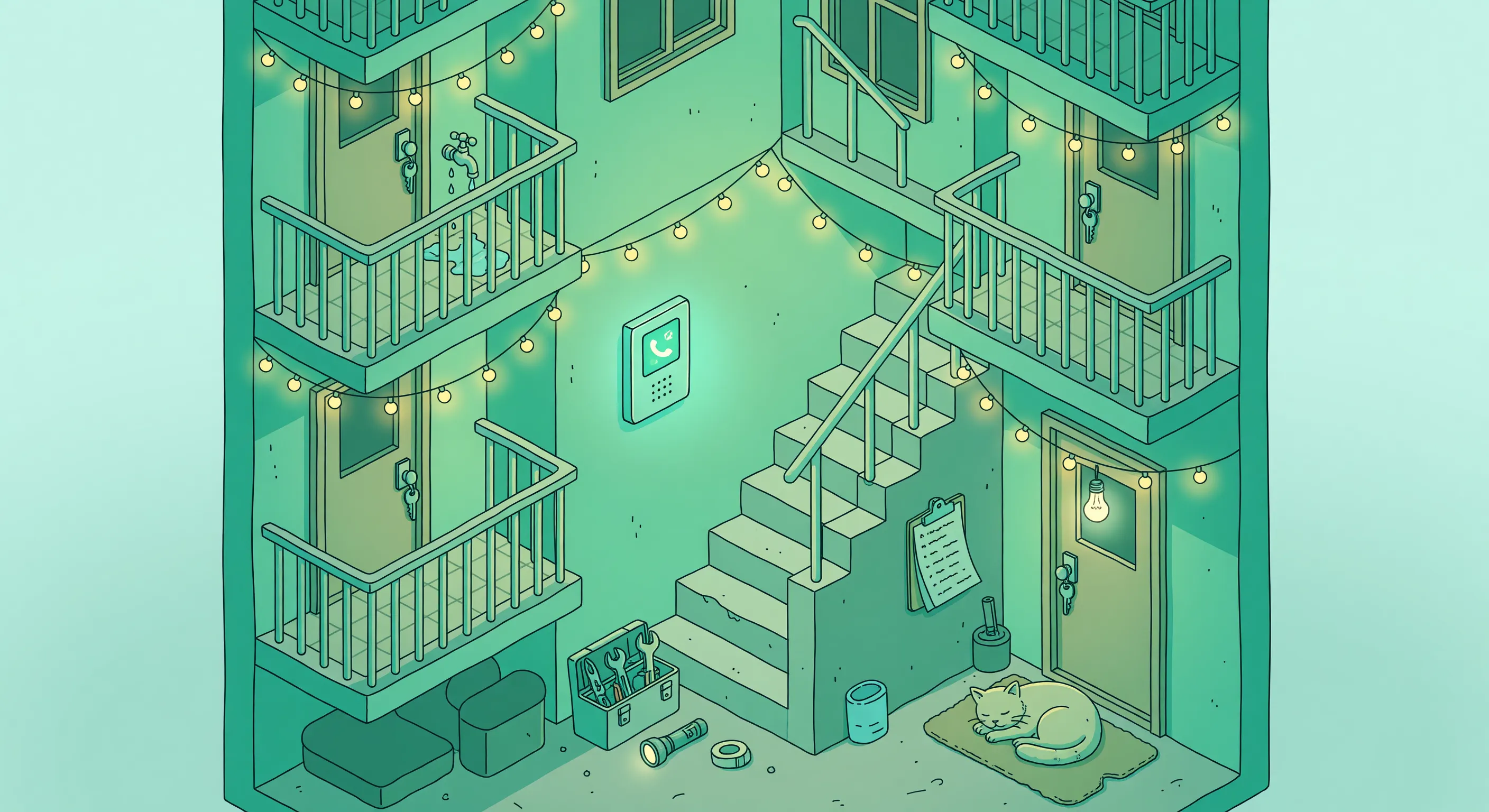

It’s 2:17 AM on a Tuesday. Your phone buzzes. A tenant says water is coming through their bathroom ceiling. You’re half asleep, trying to figure out if this is a burst pipe that needs an emergency plumber right now, or a slow drip from the upstairs neighbor’s overflowing bathtub that can wait until morning.
This is the reality of property management. Your phone never fully turns off. Tenants don’t have emergencies on a schedule, and the line between “call me now” and “this could have been an email” is blurry at best.
The result? A 2024 survey by Buildium found that 67% of property managers report symptoms of burnout, with after-hours calls cited as the number one contributor. But ignoring calls isn’t an option, because a water leak at midnight becomes a $15,000 repair job by morning if nobody responds.
So how do you stay responsive without destroying your health and personal life? Here’s what actually works.
Why Property Management Is Different
Most small businesses can let a call go to voicemail at 10 PM without consequences. A graphic designer’s client can wait until morning. A consultant’s prospect will still be interested tomorrow.
Property management doesn’t work that way. The calls that come in after hours tend to fall into three categories, each with different urgency:
Genuine emergencies: Burst pipes, gas leaks, fire alarm malfunctions, lockouts in freezing weather, flooding. These need an immediate response, often within minutes.
Urgent but not emergency: Broken heater in winter (uncomfortable but not dangerous for a few hours), toilet overflow that’s been contained, power outage in one unit. These can usually wait until the next business morning if the tenant knows someone is aware.
Can wait: Noise complaints, questions about lease terms, requests to schedule maintenance for a squeaky door, asking when rent is due. These are 60-70% of after-hours calls, and they’re the ones burning you out.
The challenge is that you can’t tell which category a call falls into without answering it.
The Cost of Always Being “On”
Let’s talk numbers. The average property manager of a mid-sized portfolio (30-80 units) receives 5-10 after-hours calls per week. Of those, 1-2 are genuine emergencies. The rest are questions, complaints, or requests that could be handled during business hours.
But each of those calls has a cost beyond the minutes you spend on the phone:
- Sleep disruption: A single nighttime call disrupts your sleep cycle even if the call lasts only 3 minutes. Research from the University of Chicago shows that interrupted sleep is cognitively worse than shortened sleep. You’re less effective the entire next day.
- Decision fatigue: Making triage decisions at 2 AM, when your judgment is impaired, leads to mistakes. You either over-react (calling an emergency plumber for a drip) or under-react (telling a tenant to “put a bucket under it” when there’s actually a burst pipe behind the wall).
- Relationship strain: Your partner, your kids, your friends, they all feel the impact when your phone can ring at any hour. Property management has one of the highest divorce rates among real estate professions, and constant availability is a major factor.
The irony is that most property managers got into the business for the flexibility and income potential, not to become a 24/7 answering service.
Triage: What’s Actually Urgent?
The first step to reclaiming your nights is having clear categories. Here’s a framework that works:
Respond Immediately (Within 15 Minutes)
- Water flooding (not a drip, actual flooding)
- Gas smell reported
- Fire or fire alarm activation
- Complete heating failure when outdoor temperature is below 0°C / 32°F
- Tenant locked out with no safe alternative (children alone, elderly, medical condition)
- Break-in or security breach
Respond Next Business Morning
- Single toilet clogged (if tenant has a second bathroom)
- Hot water not working
- Appliance failure (dishwasher, washing machine, oven)
- Minor leak that’s been contained with a bucket
- Heating running but not reaching full temperature
- Pest sighting (unless it’s an infestation)
Can Wait for Regular Business Hours
- Noise complaints (unless safety is involved)
- Lease questions
- Maintenance requests for non-urgent issues
- Parking disputes
- Questions about building rules
- Package delivery issues
The key is that tenants need to know these categories exist. If you set expectations upfront (in the lease, in a welcome packet, in a posted notice), you’ll get fewer non-urgent after-hours calls because tenants know the criteria.
Scenario: Water Leak at Midnight
Your phone rings at 11:48 PM. The tenant in unit 4B says there’s water dripping from the ceiling in their kitchen.
Questions to ask (or have your call system ask):
- Is the water actively flowing, or is it a slow drip?
- Can you see where it’s coming from?
- Is the tenant above you home? Have you knocked on their door?
- Is there any electrical equipment or wiring near the water?
- Can you place a container under the drip for now?
If it’s a slow drip and contained: acknowledge the call, reassure the tenant, schedule a plumber for the morning. Total cost: one plumber visit at regular rates.
If it’s active flowing water: call the emergency plumber, notify the upstairs tenant, and consider shutting off the water main for that section. Waiting until morning could mean drywall replacement, mold remediation, and a $10,000+ insurance claim.
The difference between these two outcomes often comes down to asking the right questions at the point of the call, not two hours later when you finally check your voicemail.
Scenario: Locked-Out Tenant at 1 AM
A tenant calls at 1:15 AM because they locked themselves out. It’s November, and it’s 2°C outside.
This feels urgent, and it is uncomfortable, but it’s rarely a true emergency unless there are children or vulnerable people inside the unit. Your options:
- If you have a lockbox or key safe nearby: Direct the tenant to it. Many property managers keep a spare key in a coded lockbox on the property.
- If not: Provide the number of a 24-hour locksmith. Make it clear in your lease that lockout fees are the tenant’s responsibility.
- Safety exception: If there’s a child alone in the unit, a medical situation, or extreme weather conditions, this escalates to a genuine emergency.
Having a protocol for this specific situation (which comes up 3-4 times per year for most managers) means you spend 2 minutes on the call instead of 45.
Scenario: Noise Complaint at 11 PM
Tenant 3A calls because 3B is playing loud music again. This is among the most common after-hours calls, and among the least urgent.
Your response framework: unless there’s a safety concern (sounds of violence, indications of a domestic situation), noise complaints do not warrant a midnight response. Acknowledge the complaint, log it, and address it during business hours. If it’s a repeated pattern, it becomes a lease violation issue that you handle formally.
The critical part: the tenant needs to feel heard. A voicemail box doesn’t accomplish that. A quick acknowledgment (“We’ve received your complaint and will address it tomorrow with the other tenant”) does. This is where an automated system that can take the message and reassure the caller makes a real difference.
Setting Up a System That Works
The goal is to respond to emergencies fast while filtering out everything else. Here’s a practical setup:
Step 1: Create an after-hours call forwarding schedule. Most phone systems let you set time-based rules. From 6 PM to 8 AM, calls forward to a different number or service.
Step 2: Use a triage layer. This is where the call goes before it reaches you personally. It could be an answering service, a call tree with options (“press 1 for emergency, press 2 for non-urgent”), or an AI assistant that asks screening questions.
Step 3: Define your escalation path. Emergency calls reach you (or your on-call person) immediately. Everything else gets logged and queued for the next morning.
Step 4: Communicate the system to tenants. Send a one-page guide with your emergency number, what counts as an emergency, and what to expect when they call after hours. Transparency reduces both call volume and frustration.
For a deeper look at how 24/7 coverage works without you being personally available, see our guide on 24/7 availability solutions.
The Math: Burnout vs. a Better System
Let’s be direct about the financial side. A property manager earning $60,000-$90,000 per year who burns out and leaves the industry represents a massive cost, whether that’s to a property management company or to the manager themselves who built a portfolio over years.
Compare that to the cost of a solution:
- Hiring a part-time after-hours person: $1,500-$3,000/month
- Traditional answering service: $200-$500/month, but operators don’t know your properties
- AI phone assistant: $11.99-$69.99/month, with the ability to ask specific triage questions
The phone cost calculator can help you compare these options based on your actual call volume.
Using Safina for Property Management
An AI phone assistant like Safina can serve as that triage layer. When a tenant calls after hours, Safina answers, asks what the issue is, determines urgency based on the answers, and either notifies you immediately (for emergencies) or sends a summary for the next morning.
The tenant gets to talk to someone (or something) that listens, acknowledges the issue, and confirms it’s been logged. You get to sleep through the noise complaints and wake up to a sorted list of what actually needs attention.
It won’t replace your judgment for complex situations. But for the 70% of after-hours calls that don’t need you personally, it’s the difference between 10 interrupted nights per month and 2.
For property management-specific features and setup guidance, visit our property management industry page.