

The 24/7 Promise: Competitive Advantage or Cost Trap?
More and more clients, especially in critical industries, are demanding guaranteed 24/7 availability in their contracts. For you as an IT service provider, this is a double-edged sword. On one hand, it’s a powerful selling point that helps you stand out from the competition and win larger, more lucrative contracts. On the other hand, it presents an enormous financial and organizational challenge.
How can you offer this service level without having the budget for a fully staffed Network Operations Center (NOC) running three shifts?
The Limits of On-Call Duty and Staffing
Traditional approaches to 24/7 coverage quickly hit their limits.
- A real 24/7 team: To cover 168 hours per week without gaps, you need at least 4-5 full-time employees. Factor in vacation, sick days, and holidays, and it becomes clear: the staffing costs — especially with night and weekend premiums — are simply not feasible for most mid-sized IT service providers.
- Traditional on-call duty: A technician takes turns carrying the emergency phone. It’s cheaper, but far from a true 24/7 service. It leads to burnout among your best people, doesn’t guarantee an immediate response, and most importantly doesn’t filter calls. Your expert gets woken up at night for a forgotten password just the same as for a server outage.
You need a solution that provides the presence of a 24/7 team without its costs.
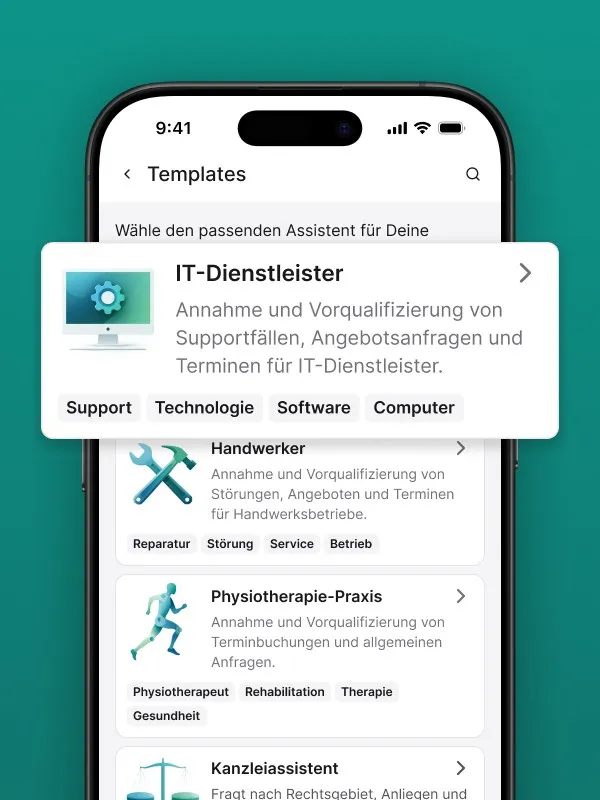
The Solution: A Digital Employee for the Night Shift
Imagine an employee who never sleeps, never needs vacation, and costs just a fraction of a technician. Such an employee can be an intelligent, automated phone assistant. It becomes your cost-effective night shift that holds down the fort while your team rests.
An AI assistant like Safina can be set up to switch into a special “night mode” after your business hours. In this mode, its primary job is to filter and protect:
- Seamless call handling: No call goes unanswered. Every client who calls at night is greeted professionally. This alone builds enormous trust and fulfills a fundamental part of your service promise.
- Strict emergency triage: The assistant asks targeted questions to assess urgency based on your predefined emergency criteria. “Has the entire system gone down?”, “Are multiple employees affected?”, “Are you unable to carry out your core business activities?”
- Targeted alerting: Only when a call is identified as a genuine, critical emergency does the system trigger an alert and notify the on-call technician via call, SMS, or push notification. All other matters are neatly documented as tickets for the next morning.
With this approach, you can confidently offer your clients a true 24/7 service. You gain a decisive competitive advantage, justify higher-tier service contracts, and protect your team from burnout — a strategically smart investment in the growth and stability of your business.
See how the phone assistant is set up for IT service providers