

The Problem of Undifferentiated Call Volume
As a practice manager, your core job is to ensure smooth and efficient operations. You know that a practice is like a complex clockwork — even the smallest disruptions can throw off the entire daily schedule. One of the biggest sources of disruption is the constant, undifferentiated stream of phone calls. Every call is initially treated the same and ends up in the same queue — regardless of how urgent the matter is.
This “first come, first served” approach is fundamentally inefficient for a medical practice. A patient with acute symptoms shouldn’t be stuck on hold because three other patients ahead of them just have a question about office hours. Efficient practice management requires a system that prioritizes by medical urgency, not by the order calls come in.
Manual Triage: Valuable but Limited
Experienced medical assistants perform this prioritization — also known as triage — every day. They filter out urgent cases over the phone. But this manual process has significant drawbacks:
- It requires experience: A new or less experienced staff member at reception may not be able to correctly assess the urgency of a concern.
- It’s labor-intensive: Triage ties up your most experienced team members on the phone instead of letting them apply their expertise to in-person patient care.
- It doesn’t scale: During high call volumes or understaffed situations, the manual triage system breaks down quickly.
To truly organize your practice efficiently, you need to automate this initial filter.
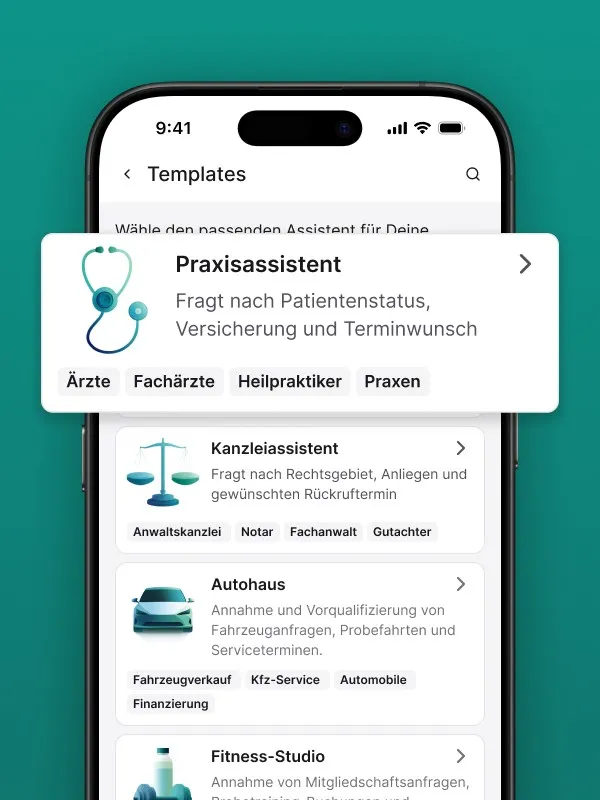
The Solution: Automated Pre-Qualification Based on Your Rules
Imagine every call being automatically guided through a standardized set of questions that immediately provides you and your team with a clear priority level. Such a system relieves your medical assistants of the burden of initial assessment and ensures consistent evaluation of every single inquiry.
An AI assistant like Safina can be equipped with a custom conversation guide that performs exactly this pre-qualification. You set the rules. The assistant asks the caller targeted questions to understand their concern:
- “Is this a request for a preventive care appointment?”
- “Are you calling about acute symptoms that started today?”
- “Do you need a repeat prescription?”
Based on the patient’s answers, the system can automatically categorize the call. Instead of unstructured messages, your inbox or practice system receives clearly labeled tasks:
- Priority 1 (High urgency): Acute pain — requires immediate callback.
- Priority 2 (Medium urgency): Appointment request for next week — callback within 4 hours.
- Priority 3 (Low urgency): Administrative question — handle during the day.
This automated pre-qualification is one of the most powerful levers for efficient practice management. It ensures the most urgent cases are always handled first, reduces stress for your team, and gives you back control to manage workflows systematically — in the best interest of patient care.