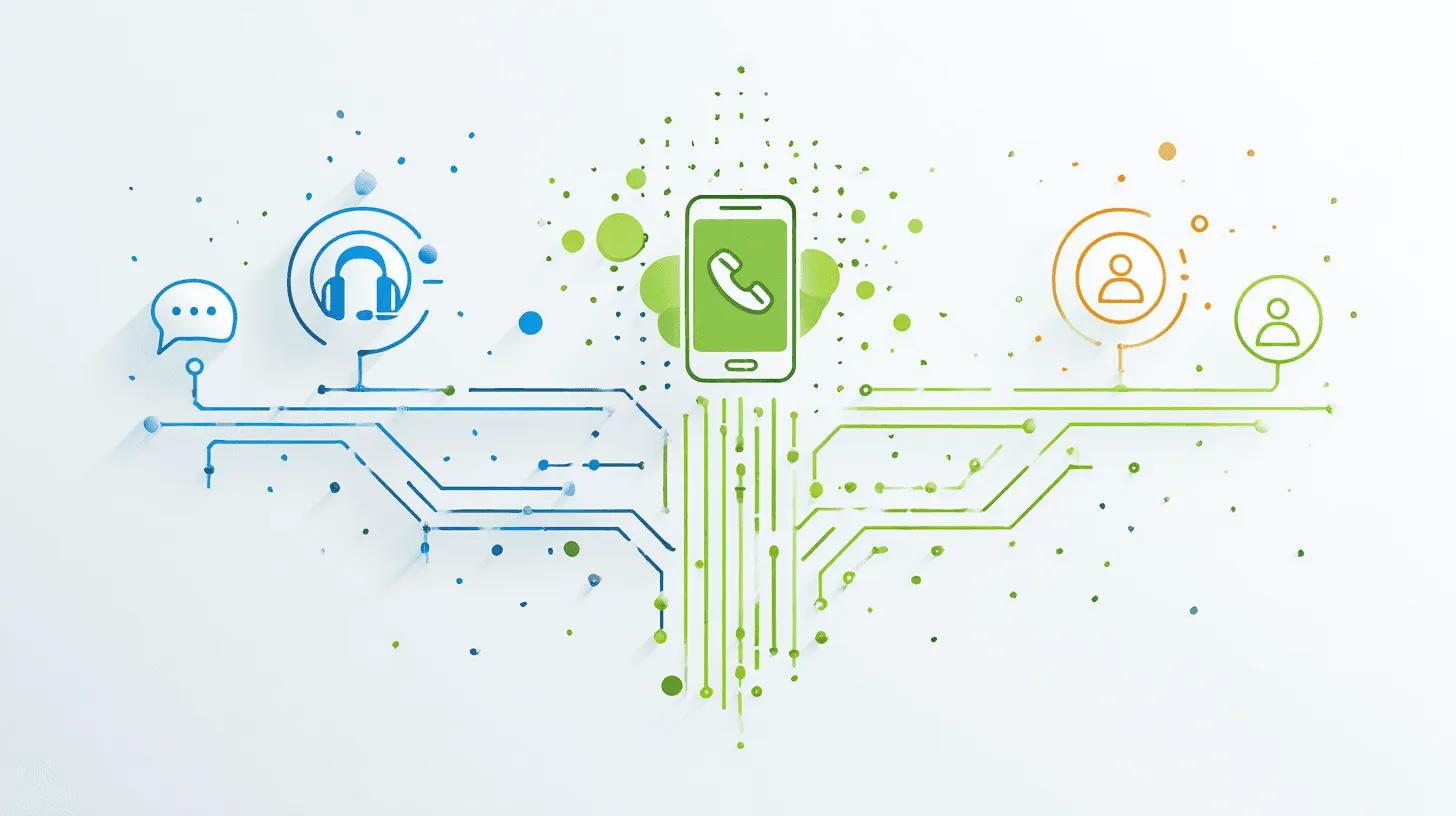

The term call routing may sound technical, but it describes an everyday and crucial process in your business: How does an incoming call reach the right person or department?
How you answer this question has a direct impact on your efficiency and, above all, on your customers’ satisfaction. While the concept is simple, the difference lies in the details — specifically, between rigid, traditional rules and dynamic, intelligent call distribution.
This article explains in plain terms what call routing is, what methods exist, and why a modern, AI-powered approach often makes the decisive difference.
Parent guide: Efficient Call Management: A Practical Guide for Businesses
Traditional Call Routing: Rigid Rules Determine the Path
Classic phone systems, still used by many businesses, typically offer a handful of simple routing methods. You’re probably familiar with some of them:
- Linear routing: The call is forwarded to a fixed sequence of destinations. First it rings at Person A, then Person B, and so on. If no one answers, the call goes to voicemail.
- Parallel routing (ring group): All phones in a defined group (e.g., the entire sales team) ring simultaneously. Whoever picks up first gets the call.
- Round-robin routing: Calls are distributed evenly among team members in rotation, ensuring a fair workload balance.
The problem with these methods? They’re “blind.” The system doesn’t know why the customer is calling. It routes the call based solely on predefined, rigid rules. This often results in customers landing with the wrong person and needing to be transferred again.
Intelligent Call Routing: When AI Understands the Call
A modern approach, like the one AI assistants such as Safina use, adds a critical step before the routing: understanding. Instead of blindly distributing a call, the AI first analyzes the caller’s concern through dialogue.
This opens up entirely new and far more efficient routing options:
- Intent-based routing: The AI asks: “What is this about?” or “How can I help you?” Once it identifies a clear intent, it makes an intelligent decision. It can handle an appointment request on its own. A support inquiry goes straight to the technical team, and a pricing question to sales — the caller reaches the right expert immediately.
- Language-based routing: The AI automatically detects whether someone is speaking German, English, or another language, and can route the call to a team member with the matching language skills.
- Priority-based routing: An AI system can be trained to listen for keywords like “emergency,” “urgent,” or “outage” and treat these calls with the highest priority or trigger escalation processes.
The Benefits in Practice: Efficiency and Satisfied Customers
Switching from rigid to intelligent call routing delivers tangible benefits:
- Higher efficiency: Calls reach the right contact without detours. This saves time for the entire team by eliminating the need for manual transfers and sorting out responsibilities.
- Better customer experience: No one enjoys explaining their problem three times. Customers receive a competent answer faster, which minimizes frustration and strengthens the professional perception of your business.
- Better resolution rates: When the expert with the right knowledge gets the call first, the chances of resolving the issue immediately skyrocket. This “First Call Resolution” is one of the most important metrics for excellent customer service.
Related article: First Call Resolution (FCR): How AI Assistants Maximize the Resolution Rate on First Contact
Conclusion: More Than Just a Transfer
Call routing has evolved. It’s no longer just a simple feature of a phone system, but a strategic process that shapes the first contact with your customer. While traditional systems merely connect calls, modern AI-powered solutions understand your customers’ needs and derive the best possible action from them. This intelligent approach is at the heart of a truly efficient and customer-friendly communication workflow.